design module

Experimental Design with Confidence from the Start

The Study Manager Design module captures experimental intent before execution begins—objectives, group structure, endpoints, and analysis intent—so studies are planned with rigor and carried forward consistently through data collection and reporting.

Governed AI assistance supports design decisions by highlighting assumptions, tradeoffs, and implications in a transparent, reviewable way—while keeping final judgment firmly in human control.

functional overview

Design Your Study Plan for Rigor and Reproducibility from the Start

The Design module structures the key decisions that determine study reproducibility and quality: what is being tested, how groups are defined, what will be measured, what assumptions will improve confidence, and how results will be interpreted. By embedding these decisions into the study workflow, Seralogix Study Manager reduces ambiguity, improves reproducibility, and minimizes downstream rework.

The Design module promotes consistency and facilitates optimizing experimental designs while also setting the stage for automating the electronic data collection processes and their forms.

Study Plan Workflow Decisions

Promoting Consistency and Optimization

lifecycle Support

How the Design Module Supports the Study Lifecycle

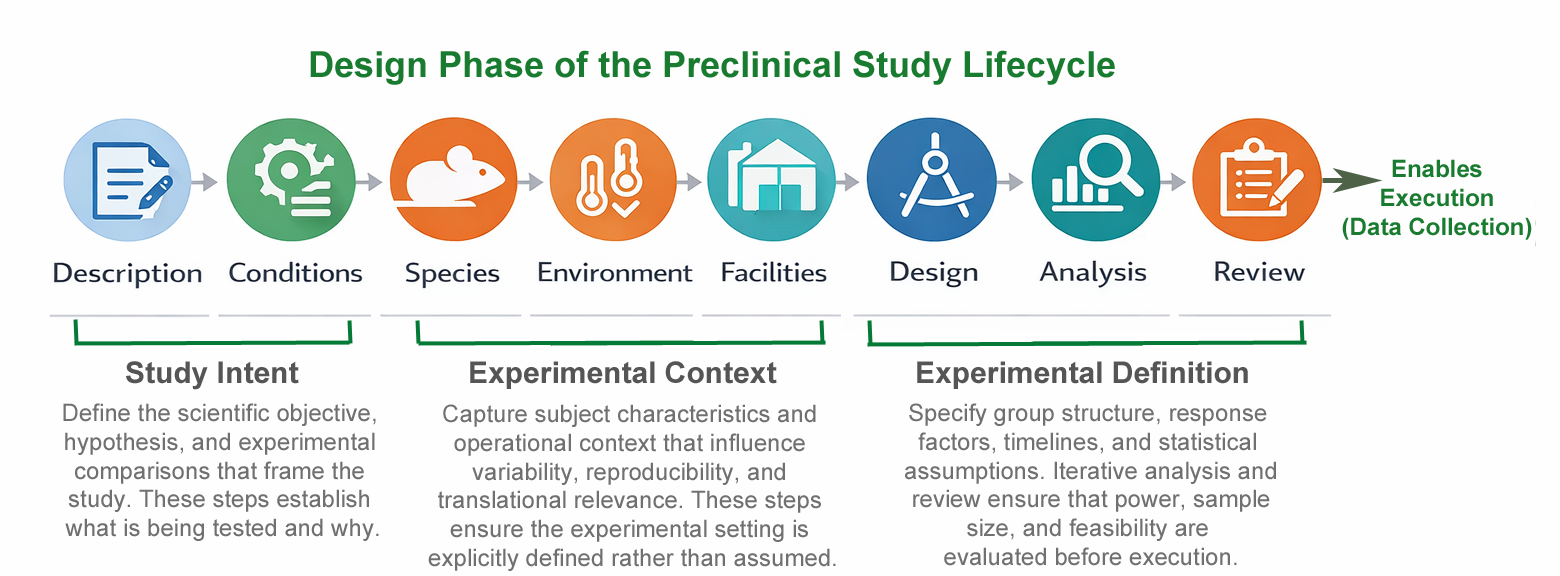
The Design module currently guides users through a structured, eight-step workflow that emphasizes deliberate, manual entry of study information. This approach ensures that critical assumptions, experimental context, and analytical intent are explicitly considered and documented—supporting rigor, reviewability, and scientific accountability.

Building on this foundation, upcoming enhancements will introduce AI-supported information entry and requirements guidance, helping users identify missing inputs, clarify assumptions, and understand design implications—while preserving full human oversight and control over all final design decisions.

Planned enhancement: AI-supported guidance to assist information entry and design requirements, layered onto the existing eight-step workflow. This staged approach ensures that AI guidance enhances—not replaces—scientific judgment, aligning with Seralogix’s governance-first philosophy for AI-assisted research.

The Design module implements a structured, eight-step workflow that defines experimental intent, context, and analytical assumptions—forming the foundation for execution, monitoring, and reporting across the study lifecycle.

By completing the Design workflow, the study transitions from intent to execution with all critical assumptions documented, reviewed, and approved—enabling the Data module to enforce collection rules, validation logic, and reporting structure derived directly from the design.

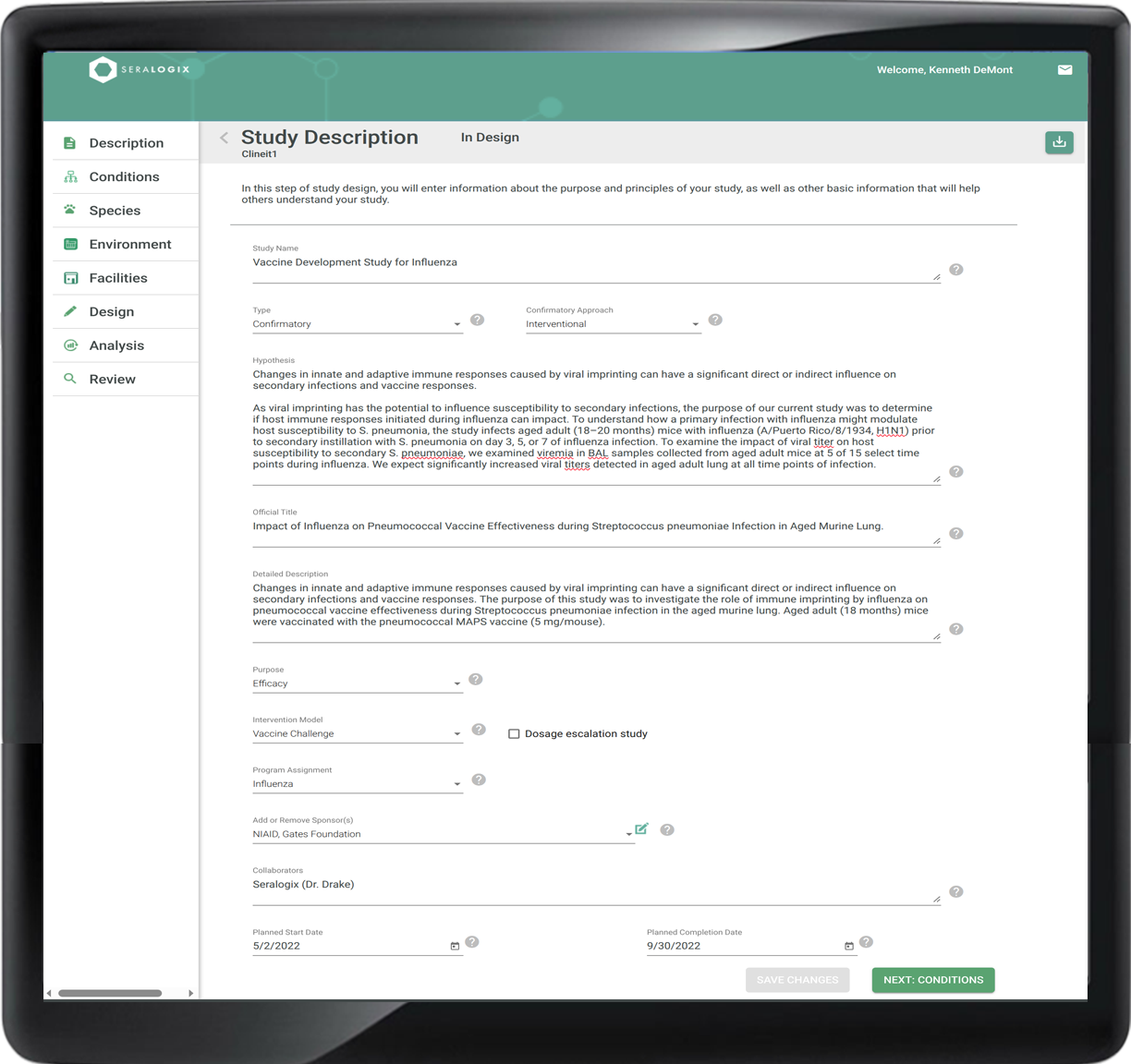
Click on any of the step buttons below to view actual UI content at any step of the Design workflow.

Design Workspace

Capture hypothesis, purpose, study type, and key descriptors.

AI-ASSISTED GUIDANCE

Evidence-Informed Design with Transparent Oversight

Governed AI assistance helps teams evaluate design choices by surfacing assumptions, potential confounders, and practical implications. Where available, it can reference prior internal outcomes and public datasets to improve planning and power assumptions—while ensuring recommendations remain advisory, reviewable, and traceable.

DOWNSTREAM ALIGNMENT

Design Decisions That Drive Data Collection and Reporting

The Design module directly informs downstream execution. Group definitions, endpoints, and timing drive data collection structure, validation logic, and reporting outputs—reducing out-of-sequence work and ensuring results are interpreted within the correct experimental context.

next steps

Design Decisions That Drive Data Collection and Reporting

The Design module directly informs downstream execution. Group definitions, endpoints, and timing drive data collection structure, validation logic, and reporting outputs—reducing out-of-sequence work and ensuring results are interpreted within the correct experimental context.